Review: Camera Multilayer 3D SVG Cut Files
As a designer who has spent countless hours digitizing and testing files for both personal passion projects and client work, I approach every new asset with a critical eye. We often see trends come and go in the world of machine embroidery design, but certain themes have a timeless appeal. The camera motif is one of them. It speaks to memory, creativity, and nostalgia. When I first loaded the Camera Multilayer 3D SVG Cut Files into my software, I wasn’t just looking at a graphic; I was evaluating its potential as a tangible, stitched product.
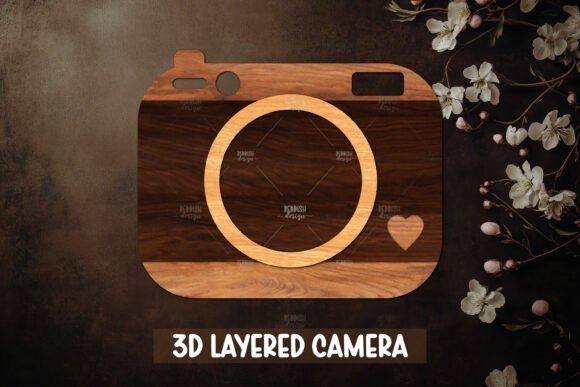
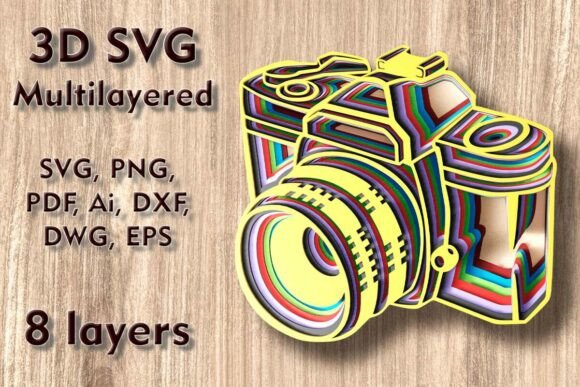
This isn’t just another flat icon. The description highlights that this is a 3D SVG intended for laser cutting or layered crafting, with eight distinct layers and a substantial footprint of 200 x 185 mm (7.9 x 7.3 inches). For an embroidery specialist, this presents a unique challenge and opportunity. How do we translate a multi-layered cut file concept into thread? Let’s dive into the practical realities of using this design in a real-world embroidery project.
First Impressions and Visual Personality
The immediate mood this design creates is one of structured elegance. Unlike whimsical or cartoonish camera icons, this layout suggests a vintage or professional aesthetic. The layering implies depth, which is crucial when you are trying to create visual interest on fabric. In embroidery, we don’t have physical layers like paper or wood; we have stitch types. To make this work, one must interpret those eight layers as varying densities of fill stitch, strategic satin stitch borders, and perhaps even applique design elements to reduce bulk.
The size is generous. At nearly eight inches wide, this is not a subtle chest logo. It is a statement piece. This scale naturally belongs on larger surfaces. I immediately envisioned this on a heavy canvas tote bag design or the back of a oversized denim jacket. The visual personality is bold, making it ideal for customers who want their handmade product to stand out in a crowded market.
Real-World Application: The Custom Tote Scenario
Let’s walk through a specific scenario. Imagine a client wants a personalized gift for a photography enthusiast. They request a custom tote bag. Using the Camera Multilayer 3D SVG Cut Files as a reference for layout, I would adapt the design for embroidery. The "layers" in the SVG become color blocks in thread.
For a tote bag, durability is key. I would likely use a dense fill for the camera body to ensure it withstands daily use. The lens details, which might be thin elements in the original SVG, would need careful handling. If I were to reduce the design significantly to fit a smaller pocket, those thin lines could disappear under the thread or cause registration issues. The product note warns about reducing the design due to thin elements, and this is sound advice. In embroidery, if a detail is too small, the needle perforations can merge, turning a crisp line into a muddy blob. Therefore, keeping the design closer to its original 200 mm width ensures clarity and stitching precision.
Navigating Fabric and Technique Challenges
Working with a design of this complexity requires attention to stitch density and fabric texture. If you are stitching this onto a textured towel or a stretchy sweatshirt, the results will vary drastically. For a sweatshirt embroidery project, I would recommend using a strong cut-away stabilizer to prevent the fabric from puckering under the weight of the thread. The camera shape has corners and curves; without proper stabilization, those sharp angles might pull or distort.
Dark fabrics present another hurdle. If you are stitching on black denim, you need high-contrast thread colors. A dark grey camera on black fabric will vanish. I always test my designs in black and white mockups first to check value contrast. For this camera design, metallic threads could add a premium feel, mimicking the chrome of a real lens, but they require slower machine speeds and careful tension adjustments.
Curved surfaces, like caps, are risky for a design this wide. A 7.9-inch width is simply too large for a standard cap front panel. This design is better suited for flat or gently curved areas, such as the back of a jacket, a pillow cover, or a large embroidered patch that can be sewn on later. Trying to force this onto a small hoop or a curved cap brim will lead to distortion and customer dissatisfaction.
Commercial Value and Brand Consistency
For Etsy sellers and craft business owners, the perceived value of a product is tied to its execution. A well-stitched, complex design like this commands a higher price point than simple text monograms. It signals professionalism. When a customer sees a multi-colored, detailed camera on a boutique item, they perceive effort and skill. This builds trust and encourages repeat business.
However, consistency is vital. If you are selling this as part of a collection, ensure your thread colors match your brand palette. A cohesive look across your small shop product line helps with brand recognition. Use this design as a flagship item in your digital embroidery file portfolio or as a premium add-on for custom apparel orders.
Practical Designer Notes
Before you commit to stitching this on a final garment, follow these steps:
- Test on scrap fabric: Always run a test stitch-out on the same material you plan to use for the final product. Check for puckering and thread breaks.
- Check stitch density: If converting from SVG to embroidery, ensure the fill areas are not too dense, which can cause stiffness and fabric damage.
- Inspect small details: Zoom in on the lens rings and buttons. If they are too small, simplify them or enlarge the overall design.
- Confirm licensing: While this is a cut file, if you are adapting it for embroidery sales, ensure you have the right to create derivative works for commercial use. Always verify the license terms provided with the design assets.
- Hooping strategy: Given the size, ensure your machine hoop can accommodate 200 x 185 mm. If not, you may need to split the design, which is complex and not recommended for this type of layered graphic.
In conclusion, the Camera Multilayer 3D SVG Cut Files offers a robust foundation for creative adaptation. It is not a plug-and-play embroidery file, but rather a sophisticated template for designers who understand how to translate layered depth into thread. With careful attention to scale, stabilizer choice, and thread contrast, this design can elevate your holiday embroidery gifts, baby embroidery keepsakes, or commercial embroidery offerings. It rewards the maker who takes the time to plan, resulting in a finished product that is both visually striking and professionally executed.